Why Filipinos Don’t Speak Spanish Anymore And Why English Became Our Second Language
If you grew up in the Philippines, chances are you’ve wondered about this too: “Spain ruled us for 333 years, so why don’t we speak Spanish?” It’s one of those questions that pops up during a random history chat, a trivia night, or when a Spanish tourist is surprised that we barely understand their language. It sounds ironic, right? Three centuries under Spanish rule — and yet most Filipinos today can’t hold a basic conversation in Spanish. Let’s unpack that story — not as a heavy history lesson, but as a short, honest journey through what really happened, and how English, not Spanish, became our second language.
SEVEN
10/17/20254 min read
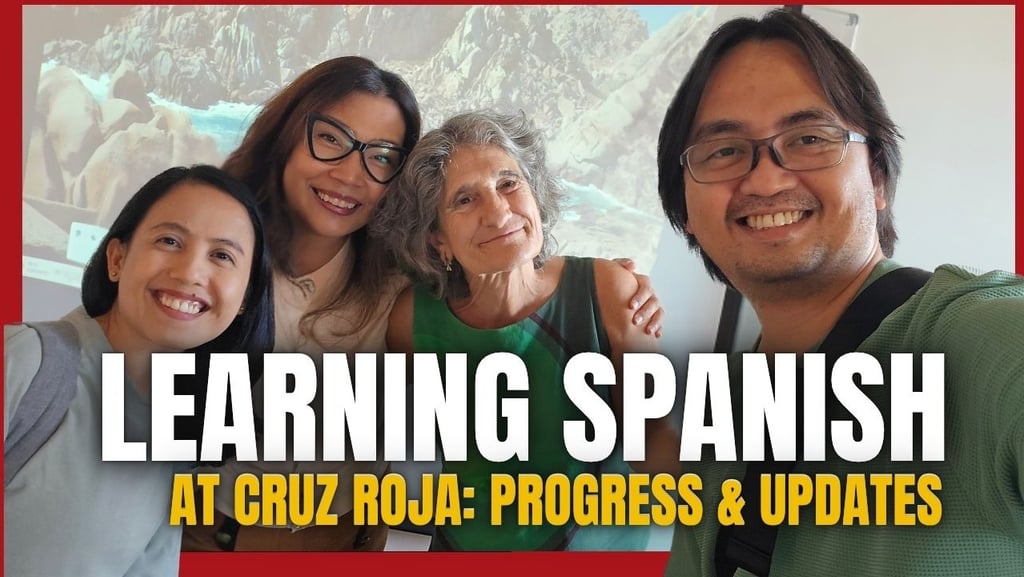
A Long Spanish Shadow — But Not Quite a Spanish Nation
Spain first arrived in the Philippines in the 1500s and ruled until 1898 — that’s over three centuries of influence. During those years, Spanish was the language of power, religion, and government. It shaped our culture, names, food, and even the way we count or pray.
Look around: mesa, kutsara, bintana, silya, lunes, sabado — those words we say every day are borrowed straight from Spanish. Many of our surnames (from the 1849 Clavería decree) and towns like San Fernando, Santa Rosa, or San Pablo are all traces of that long connection.
But here’s the twist: for most of that 333-year rule, very few Filipinos actually spoke Spanish. The language mostly stayed within the upper class — the government officials, priests, and the wealthy educated elite. The majority of Filipinos continued to speak their local languages — Tagalog, Cebuano, Ilocano, Hiligaynon, Waray, and so on.
Why? Because Spain didn’t create a widespread public education system in the islands. The friars focused more on teaching religion and catechism than making everyone fluent in Spanish. So, while the archipelago absorbed a ton of Spanish vocabulary and culture, the language itself never became the everyday speech of most Filipinos.
From Law to Lifestyle — English Took Root
Even after independence in 1946, the trend continued. The 1935 Constitution first recognized English and Spanish as official languages, but things evolved fast. By the time the 1987 Constitution came around, it was official: the national language would be Filipino, and the official languages would be Filipino and English.
Spanish, once the language of the elite, was reduced to “optional and voluntary.” It quietly faded from classrooms, courtrooms, and everyday life.
Today, you’ll find traces of it in a few university programs, and in the Chavacano communities in Zamboanga and Cavite — where a Spanish-based creole is still spoken. But nationwide? English won by a landslide.
Then Came the Americans — and the Big Language Shift
In 1898, Spain lost the Philippines to the United States after the Spanish-American War. And with that, a brand new language story began.
The Americans didn’t waste time setting up what Spain never did — a public education system. In 1901, they sent hundreds of teachers known as the Thomasites, whose mission was to teach English to Filipino students across the islands.
Imagine a classroom in Manila or Cebu in the early 1900s: young Filipinos repeating English phrases, learning how to spell, read, and write in a language totally new to them. It was part of a bigger plan — the U.S. wanted to create a “modern,” English-speaking colony that could communicate, trade, and eventually self-govern in a way aligned with American systems.
Over time, English became not just a school subject, but the language of government, law, and media. Newspapers were printed in English. Universities taught in English. Laws were written in English. Within just a few decades, English replaced Spanish as the main language of education and power.
But the Spanish Spirit Never Left
Even though we don’t speak Spanish, we still live with its echoes everywhere.
From our food (adobo, lechon, empanada), to our Catholic traditions, to our surnames and place names — Spanish influence remains deeply woven into Filipino identity. It’s in our mañana habit, our fiestas, and even in our love for telenovelas.
And in recent years, there’s been a quiet curiosity about relearning it. The Instituto Cervantes in Manila offers classes, scholarships, and cultural programs that reconnect Filipinos to that old linguistic bond. Some young people are learning Spanish again — not because it’s required, but because it feels like rediscovering a piece of our past.
So, What’s the Real Answer?
The short version?
We don’t speak Spanish anymore because it was never fully taught to the majority during Spanish rule — and English took its place through education and governance under the Americans.
Spanish left us with thousands of words, customs, and traditions — but English became the second language of the Filipino dream. It opened doors to jobs, education, and the global stage.
In a way, our story is a mirror of our history: colonization, adaptation, and transformation. We took what was given, mixed it with who we are, and made it our own.
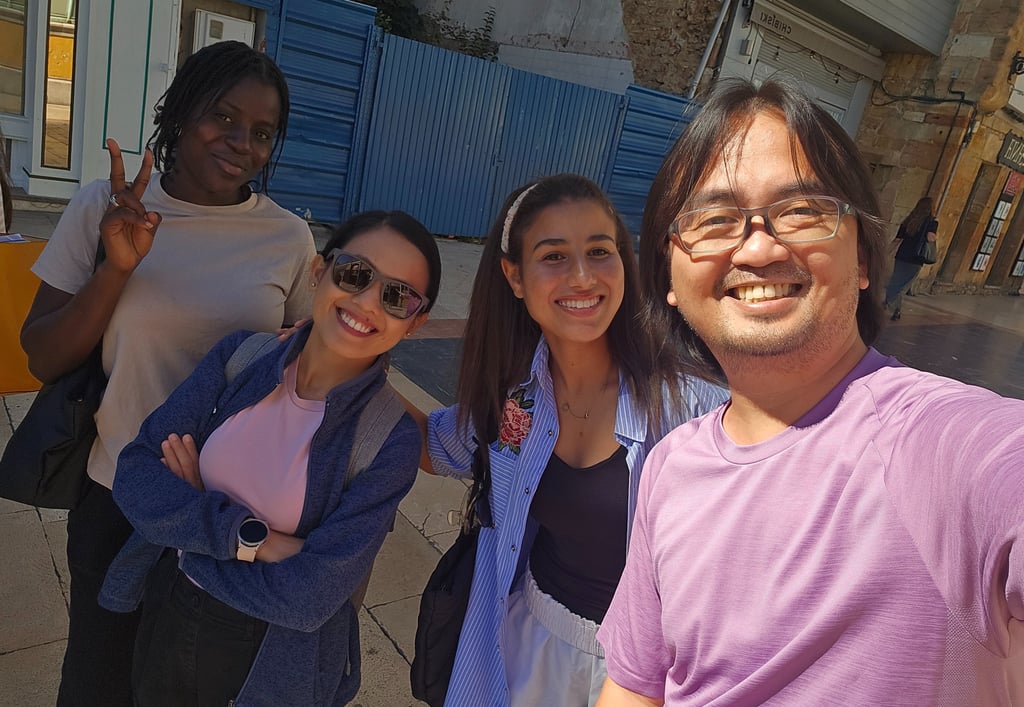


So, Why English and Not Spanish?
In the simplest terms:
Because the Americans built a system that made English the key to education, opportunity, and success.
Think about it. For generations now, English has been the language of higher education, the corporate world, technology, and international work. Kids learn it in school, TV shows are dubbed in it, and most Filipinos use English every day — even if it’s mixed with Tagalog or Bisaya. (“Can you pass me the asin, please?” is basically our national sentence structure!)
Spanish, on the other hand, became less practical. By the mid-1900s, very few families spoke it at home. And as the country modernized, the need for Spanish simply faded.
Final Thoughts
Language tells stories — of power, culture, memory, and change. The Philippines may not speak Spanish anymore, but it carries a unique blend that no other nation has: local languages full of Spanish words, wrapped in English expressions, and powered by Filipino creativity.
We didn’t lose Spanish completely — we just evolved into something multilingual, expressive, and proudly our own.
We’re a Filipino couple who turned our love for travel into a lifestyle.
In 2024, we took a bold step: becoming digital nomads in Spain.
Join us in our journey to living our dream!

LET'S CONNECT
Join us on our digital nomad journey.
© 2025 MJ & SEVEN | All rights reserved.
EMAIL US
SUBSCRIBE