When "Kababayan" Hurts a Fellow Filipinos: Understanding Toxic Filipino Dynamics Abroad
Living abroad as a Filipino often comes with a quiet contradiction. On one hand, there’s an unspoken expectation of solidarity — tulungan, damayan, kapwa. The idea that when you meet a fellow Pinoy overseas, you’ve found instant safety, familiarity, and a little piece of home. On the other hand, many Filipinos abroad quietly admit the same hard truth: “Minsan, kapwa Pilipino pa ang kailangan mong iwasan.” This piece isn’t written to shame us. It’s written to understand us. Not to generalize, but to reflect. Not to accuse, but to ask why. Because the uncomfortable truth is this: some of the most painful conflicts Filipinos experience abroad don’t come from locals. They come from our fellow Filipinos.
SEVEN
12/14/20254 min read
Crab Mentality Abroad: Not Just Cultural, But Contextual
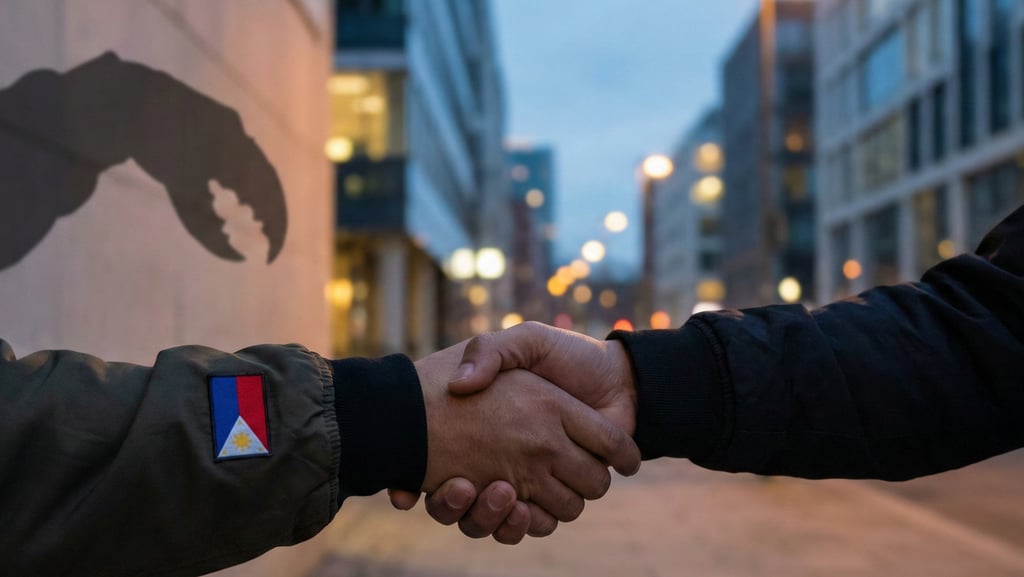
“Crab mentality” is often framed as a uniquely Filipino flaw. But social psychology shows this "pull-you-down" behavior appears in many communities facing limited resources and high competition.
What makes it so visible among Filipinos abroad is the context: many migrants occupy the same low-margin industries, opportunities feel genuinely limited and finite, and legal and financial margins for error are thin. When one person climbs out, others fear they will be left behind, taking the last visible resource with them.
But here’s the hard truth: Crab mentality doesn’t come from hatred. It comes from fear. Fear of being left behind. Fear of being forgotten. Fear that there simply isn’t enough space for everyone to rise.
The Expectation of Unity and the Shock When It Breaks
Most Filipinos leave the country carrying more than just luggage. We carry stories, responsibilities, and deep-seated cultural expectations.
Many of us were raised with the belief that Filipinos stick together. That "kapwa" means a shared identity and mutual respect. That "utang na loob" and "pakikisama" bind us into a resilient community, especially when far from the homeland.
So when a fellow Filipino becomes overly competitive, judgmental of your progress, dismissive of your struggles, or worse, actively harmful, it feels like a betrayal, not just of personal trust, but of culture itself. This is where confusion turns into deep, simmering resentment.
Why Do Some Filipinos Fight Fellow Filipinos Abroad?
The answer isn’t simple and it isn’t just "inggit" (envy). Research on migrant communities consistently shows that stress, scarcity, and identity pressure deeply affect behavior.
Many Filipinos abroad exist in a state of high fragility, experiencing financial pressure from remittances, crushing debt from migration costs, fear of losing legal status or employment, isolation and cultural displacement, and the constant pressure to appear "successful" back home.
When survival feels fragile, comparison becomes sharper. Someone else’s progress can feel like a direct threat — not because it actually is, but because it highlights what we fear we might never reach. This unhealed pressure leaks out sideways and can manifest as subtle sabotage, pervasive gossip and character attacks, gatekeeping vital information, or open conflict. It is not because Filipinos are inherently toxic, but because unhealed pressure always seeks an outlet.
Why Some Filipinos Resort to Harmful or Illegal Acts
This is the hardest part to talk about, but avoiding it doesn’t make it disappear. Across many countries, reports and studies show that migrant vulnerability increases the risk of labor exploitation, document fraud, illegal recruitment, and community-based scams. When systems are unfamiliar and support is limited, people often rely on kababayan networks, and sadly, trust can be weaponized.
Some Filipinos scam fellow Filipinos not because they are evil, but because they are drowning in debt, afraid of deportation, pressured to send money home, or trapped in cycles they don’t know how to escape. This doesn’t excuse the harm. But it explains why desperation sometimes overrides values. Understanding motive is not the same as tolerating behavior.
The Silent Result: Why Many Filipinos Choose Distance
After just one bad experience, many Filipinos abroad choose distance. You hear it often: “Mas okay pang makipagkaibigan sa locals.” (It’s better to befriend the locals.)
This isn’t self-hate. It’s self-protection.
When the expectation of automatic trust is broken, people build boundaries. They choose smaller, vetted circles. They become cautious—not cold. Ironically, this necessary avoidance further weakens community support, creating a cycle where mistrust grows, isolation deepens, and negative experiences become more common.
The Other Side We Don’t Talk About Enough
This piece would be incomplete without acknowledging the truth many forget: Filipino communities abroad also save lives.
For every toxic interaction, there are countless acts of quiet, powerful kapwa: the kababayan who shares job leads freely, the one who opens their home to a newcomer, the person who quietly translates documents or acts as a shield against a scam. The friend who shows up without being asked. These people exist, often unnoticed, because healthy support doesn’t create drama. They are the living proof that toxicity is not destiny.



Choosing Healing Over Repetition
If you’re a Filipino abroad reading this, here’s the gentle question: What version of kababayan do you want to be?
The one who competes silently, resents quietly, and watches others fall? Or the one who understands that another Filipino’s success doesn’t erase your worth, someone else’s escape doesn’t trap you further, and growth multiplies when shared.
We don’t heal community wounds by pretending they don’t exist. We heal them by naming them —honestly, calmly, and with compassion. Not all Filipinos abroad are toxic. But all of us carry something that needs unlearning.
And healing begins the moment we choose not to pass our pain forward.
(This blog is written from lived experience, reflection, and research. Not to accuse, but to understand. If it resonates, perhaps it’s not because it’s negative, but because it’s honest.)
If you’ve been enjoying our little life updates from Oviedo — the cold walks, Spanish class struggles, fun runs, and random chaos, you’re more than welcome to join the journey.
No pressure, no drama.
Just two Filipinos trying to survive Spanish verbs and Asturian winters.
Your support means a lot, and it keeps us going (and editing until 2 AM ).
Let’s grow together. Hasta Luego!


LET'S CONNECT
Join us on our digital nomad journey.
© 2025 MJ & SEVEN | All rights reserved.
EMAIL US
SUBSCRIBE