The Subtle Poison: Unpacking the Toxic Filipino Mindsets We Need to Outgrow
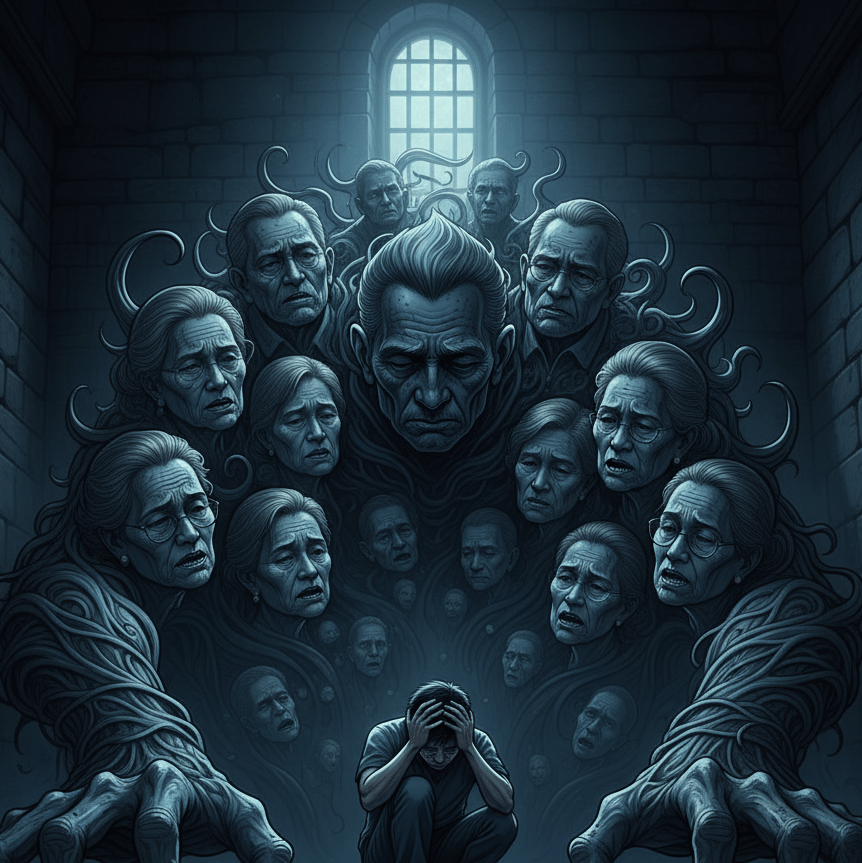
There’s something deeply beautiful about being Filipino — the warmth, the hospitality, the humor that survives even the hardest times. We’re resilient, creative, and family-centered. But let’s be honest: beneath that surface, there are habits, phrases, and traditions we’ve inherited that quietly hurt us. They disguise themselves as “culture” or “values,” but they can hold us back from growth, independence, and genuine happiness. This isn’t about blaming anyone or canceling our heritage. It’s about awareness. Because the moment we name the problem, we start healing it. And as more Filipinos build new lives abroad, start online careers, or embrace different ways of thinking, these patterns are becoming more visible — especially when we see how much they contrast with other cultures. Let’s talk about some of the most persistent cultural habits that quietly shape our lives — and why it’s time we start unlearning them.
SEVEN
10/29/20258 min read
Utang na Loob: Gratitude or Guilt Trap?
Every Filipino child grows up knowing this phrase: utang na loob — that invisible debt of gratitude that ties you to someone who helped you. In its pure form, it’s beautiful. It reminds us to remember kindness and to pay it forward. But in its distorted version, it becomes emotional blackmail.
Research from Revisiting the Filipino Value Utang na Loob (2024) shows that while this value strengthens family ties, it can also create moral pressure, especially when used to control choices. Think of the parent who says, “I raised you, so you owe me everything.” Or the politician who expects loyalty because of a favor granted years ago.
Even in small ways, this mindset appears in daily life — like being guilted into helping someone you no longer trust, or staying silent about injustice because you “owe” someone your support.
The truth? Gratitude doesn’t mean servitude. You can appreciate what someone did for you and still make choices for your own well-being. As philosopher Napoleon Mabaquiao wrote in Reassessing the Ethics of Utang na Loob, “Reciprocity without freedom is no longer virtue — it’s coercion.”
We owe our loved ones honesty, not blind obedience. Sometimes, saying “thank you” also means saying “I’ll take it from here.”
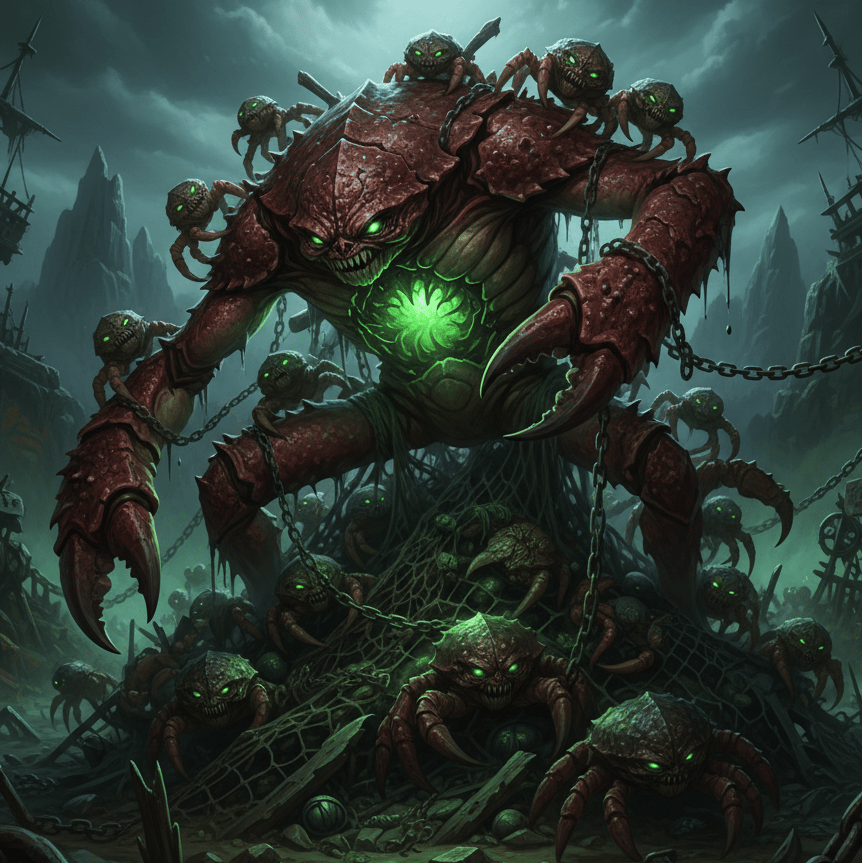
The Weight of Crab Mentality
“Kung hindi ako umangat, dapat ikaw rin hindi.” (If I don't rise, you shouldn't either.)
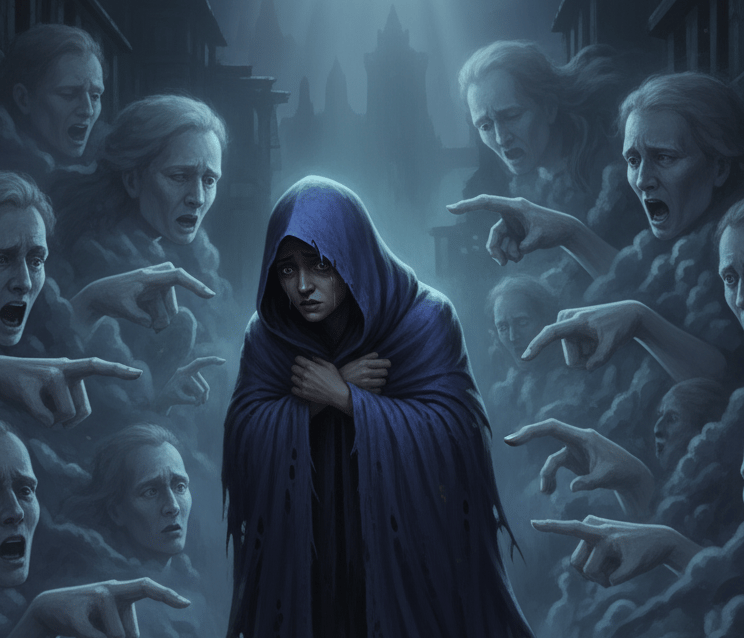
That’s the silent echo behind so many jealous comments, backhanded compliments, or quiet sabotages. It’s what we know as crab mentality — pulling others down the moment they start to rise.
It often comes from envy or insecurity, not necessarily cruelty. A study called The Ambivalence of Crab Mentality as a Filipino Value (ResearchGate, 2023) explains how this mindset stems from deep social comparison and the pressure to belong. When we see someone doing better, especially in the same circle, we sometimes take it personally — as if their success exposes our own lack.
You can see it everywhere: in workplaces, when someone gets promoted; in small towns, when someone dares to dream differently; online, when a content creator gains traction and suddenly the comment section fills with “Nagbago ka na.”
But the truth is, someone else’s light doesn’t dim yours. It’s not a competition. Jordan Imutan, a leadership coach, wrote in Breaking the Chains: How to Overcome Crab Mentality in the Filipino Workplace (2024) that the antidote is collaboration — turning comparison into inspiration. Instead of asking, “Why them?”, start asking, “What can I learn from them?”
That shift changes everything.
The Padrino System: Connections Over Merit
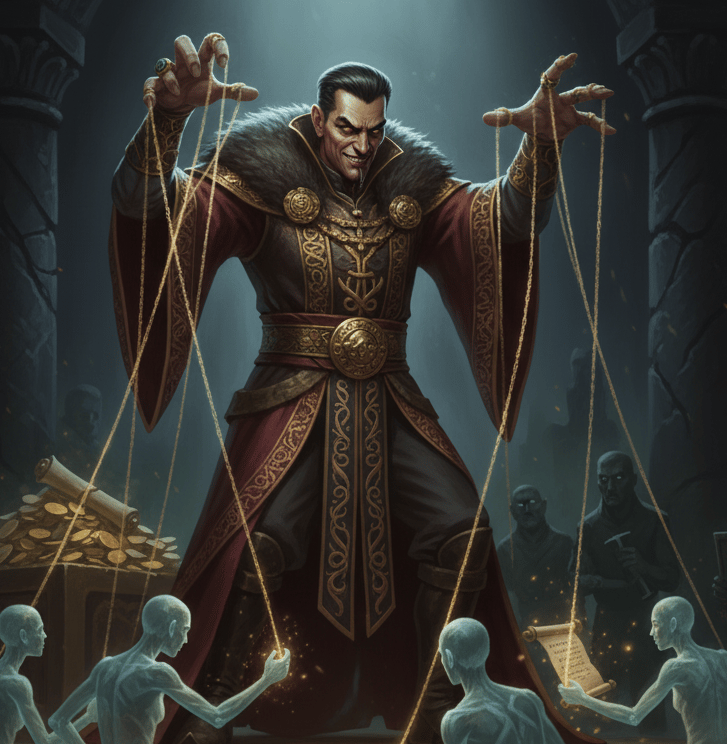
It’s no secret that the padrino or palakasan system has long shaped opportunities in the Philippines. From government jobs to simple paperwork, connections often open doors that merit alone cannot.
A 2024 study from the Social Ethics Society Journal calls this a “cultural survival mechanism,” born from centuries of colonial and feudal structures where power meant access. But today, it continues to breed inequality and cynicism.
We grow up believing that knowing someone important is better than being someone capable. We stop trying because “wala tayong kakilala diyan.” And that mindset doesn’t just affect systems — it seeps into our psyche. It convinces us that success is luck, not effort.
But when you live abroad or work in global spaces, you quickly realize meritocracy matters. Effort, skill, and attitude open more doors than last names or favors. And that realization is both liberating and heartbreaking. It shows what we’ve been missing all along: fairness.
Maybe it’s time we start creating micro-worlds — in our families, businesses, or online communities — where hard work truly matters more than connections. Because change always starts small, then spreads.
Hiya: The Fear of Standing Out
“Wag ka masyadong maingay.” (Don't be too loud)
“Wag kang magpaka-iba.” (Don't pretend to be different)
“Wag kang magkamali.” (Don't make a mistake)
That’s hiya — a word that translates roughly to “shame,” but runs much deeper in Filipino culture. It’s a quiet but powerful force that keeps people in line, making us overly self-conscious of how others see us.
According to a 2021 Ateneo study on Cultural Values, Parenting and Child Adjustment in the Filipino Family, hiya is instilled from childhood as a way to maintain harmony. But it also teaches kids to suppress emotion, creativity, and assertiveness — the very traits that lead to personal growth.
We learn to say yes when we mean no. We apologize for existing too loudly. We laugh off discomfort instead of addressing it.
And when we grow up, we carry that into our workplaces, relationships, and dreams. We fear standing out. We play small. We blend in.
But the truth is, humility doesn’t mean invisibility. You can be kind and still speak your truth. You can be respectful and still take up space.
The world doesn’t need another quiet Filipino afraid to shine. It needs more of us unlearning the shame that never belonged to us in the first place.
The Road to Unlearning
Recognizing these toxic mindsets isn’t an act of betrayal — it’s an act of love. Love for who we could be as a people if we stopped clinging to patterns that no longer serve us.
Every generation has a chance to rewrite the script. To keep what’s beautiful — our kindness, our humor, our sense of community — and let go of what holds us back: the guilt, the envy, the shame, the pressure.
Healing doesn’t happen overnight. It happens in small conversations, in quiet boundaries, in choices that go against the grain. It happens when you celebrate someone’s success instead of resenting it. When you express gratitude without guilt. When you speak up even if your voice shakes. When you choose merit over favoritism. When you stop asking people when they’ll get married and start asking if they’re happy.
Maybe the real evolution of being Filipino isn’t just surviving — it’s unlearning.
Because the most beautiful version of our culture isn’t in the past. It’s what we’re building right now.
Family Pressure: The Constant “When” Questions
"Kailan ka magkakaroon ng boyfriend?" (When are you going to have a boyfriend?)
"Kailan ka ikakasal?" (When are you getting married?)
"Kailan ka magkakaroon ng mga anak?" (When will you have kids?)
These questions might sound harmless — part of normal Filipino conversations during reunions or family dinners. But for many, they’re exhausting. They dig into choices that are personal, complex, and often painful.
The United Nations Population Fund (UNFPA) released a 2024 report revealing how social pressure and affordability issues shape the way young Filipinos start families. Meanwhile, PhilStar Global reported that more and more Filipinos are choosing to delay marriage and parenthood — not out of rebellion, but practicality.
And yet, the old expectations remain. If you’re single, you’re “picky.” If you don’t have kids, you’re “selfish.” If you focus on your career, you’re “too modern.”
We forget that happiness doesn’t have a timeline. Fulfillment isn’t one-size-fits-all.
The truth is, not everyone’s dream involves a wedding, a mortgage, or a crib. And that’s okay. What’s unhealthy is how we equate milestones with worth — as if your value depends on ticking boxes in the right order.
Esquire Philippines published a 2025 feature that summed it up well: “For Filipinos, the ideal age to marry and have kids is shifting — because priorities are finally shifting too.”
Maybe what we need more than tradition is empathy — the kind that lets people bloom in their own season.
Sources & References for further reading
Crab Mentality
The Ambivalence of Crab Mentality as a Filipino Value – A psychological study exploring how envy and social comparison shape Filipino competitiveness.
Crab Mentality: A Philippine Phenomenon? – A reflective blog on how this mindset shows up in daily life and politics.
Breaking the Chains: How to Overcome Crab Mentality in the Filipino Workplace – A 2024 leadership essay by Jordan Imutan with practical tips for organizations.
Utang na Loob (Debt of Gratitude)
Revisiting the Filipino Value Utang na Loob – Recent academic paper discussing how “utang na loob” evolves in modern Filipino life.
Reassessing the Ethics of Utang na Loob – Philosophical look at the moral boundaries of reciprocity and obligation.
Understanding Utang na Loob – Philippine Daily Inquirer opinion piece explaining both its beauty and its darker side.
Upholding an Accommodative Filipino Value: A Measure of Utang na Loob Orientation – A research-based measurement of how Filipinos interpret this value today.
Hiya (Shame Culture)
Cultural Values, Parenting and Child Adjustment in the Filipino Family – Ateneo research on how shame and “hiya” affect children’s emotional expression.
The Contemporary Filipino Family Life – A 2021 sociological paper analyzing family harmony, pressure, and conformity.
Padrino / Palakasan System
The Padrino System in Philippine Politics and Society – Social Ethics Society Journal study on patronage, nepotism, and political ties.
Wikipedia: Padrino System – A straightforward summary of how patronage networks operate in the Philippines.
Family and Relationship Pressure
UNFPA Philippines: Lack of choice, agency, affordability, and pressures in starting a family – UNFPA research on social expectations surrounding marriage and parenthood.
PhilStar Global: More Pinoys opting to delay marriage and having kids – PopCom – News coverage on changing trends among young Filipino adults.
IJMRAP: Social Expectations and the Filipino Family System – Academic paper examining family pressure and decision-making.
RichestPH: Filipino Family Pressure and Your Mental Wellbeing: How to Cope – Mental health insights about coping with intrusive family expectations.
Esquire Philippines: For Filipinos, the ideal age to get married and have kids is … – A 2025 feature on how cultural norms about marriage are shifting.
NUS AsiaScope: Do Filipinos still say ‘I do’? – Regional analysis on cohabitation and delayed marriage in Asia.
Where Did These Patterns Come From? A Historical Peek
To understand why these toxic patterns exist, we have to look at history — not to blame, but to trace how culture evolves.
Many of these habits didn’t appear out of nowhere. Take the padrino system, for example. It’s a modern echo of centuries-old hierarchical structures, dating back to the Spanish colonial period. Back then, power and privilege were concentrated among a few families, and loyalty networks were survival tools. If you were well-connected, you had food, protection, and opportunity. If not, you relied on relationships or patronage to survive. That instinct carried over generations. Today, the “who you know” mindset still lingers — even in everyday jobs, schools, and government offices.
Similarly, utang na loob comes from centuries of communal living and intergenerational dependency. In traditional Filipino society, families and extended kin relied heavily on each other for survival. Being indebted in gratitude wasn’t just polite — it was literally a social contract that kept communities together. Over time, though, this sense of obligation could shift into subtle coercion, especially as societies modernized and individual choice became more important.
Then there’s hiya or shame culture. In pre-colonial and colonial times, harmony and social cohesion were survival mechanisms. Small communities depended on cooperation, and standing out could bring real consequences — social ostracism, loss of resources, or worse. Over centuries, that turned into a deep cultural emphasis on politeness, humility, and conformity. While these traits are admirable, they sometimes suppress individuality or make it difficult to confront injustice.
Crab mentality seems purely social, but it’s also tied to economic history. Scarcity, inequality, and colonial hierarchies created an environment where success was limited to a few. Watching someone else succeed could trigger anxiety or competition — a mindset passed down, subtly, through social learning.
Even family and relationship pressure has historical roots. Extended families were tightly knit, and survival often depended on marrying at the right time, producing heirs, and maintaining lineage. Over time, these expectations became internalized as moral and social imperatives, now showing up as the “When are you getting married?” questions we hear at every family gathering.
Are These Unique to Us?
Not entirely. Many cultures have similar patterns, just with different names. Patronage exists in parts of Latin America and South Asia. Shame cultures are common in East Asia, with Confucian societies emphasizing honor and social harmony. Obligatory gratitude, envy, and pressure around marriage are also found globally — just in different forms.
What makes the Filipino versions distinctive is the combination: utang na loob, hiya, crab mentality, padrino, and family pressure exist together in a small, relationally dense society. They interact in ways that are uniquely intense, shaping both social life and personal identity.
So, while we’re not the only culture to wrestle with these issues, the Filipino flavor of it — warm, relational, but sometimes suffocating — is uniquely ours. Understanding the history gives us perspective: these patterns are inherited, not inevitable. And recognizing that is the first step toward choosing which habits we carry forward — and which we leave behind.

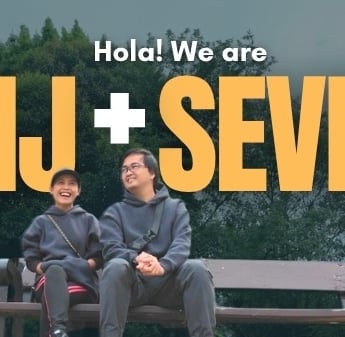
We’re a Filipino couple who turned our love for travel into a lifestyle.
In 2024, we took a bold step: becoming digital nomads in Spain.
Join us in our journey to living our dream!


LET'S CONNECT
Join us on our digital nomad journey.
© 2025 MJ & SEVEN | All rights reserved.
EMAIL US
SUBSCRIBE